
A brand team makes the fintech look credible. A site build partner ships the pages.
A compliance adviser writes the obligations into a document.
Each supplier solves their slice. Nobody owns the commercial surface as one system.
Four systems. One architecture. Fixed-scope delivery. Clean handover.




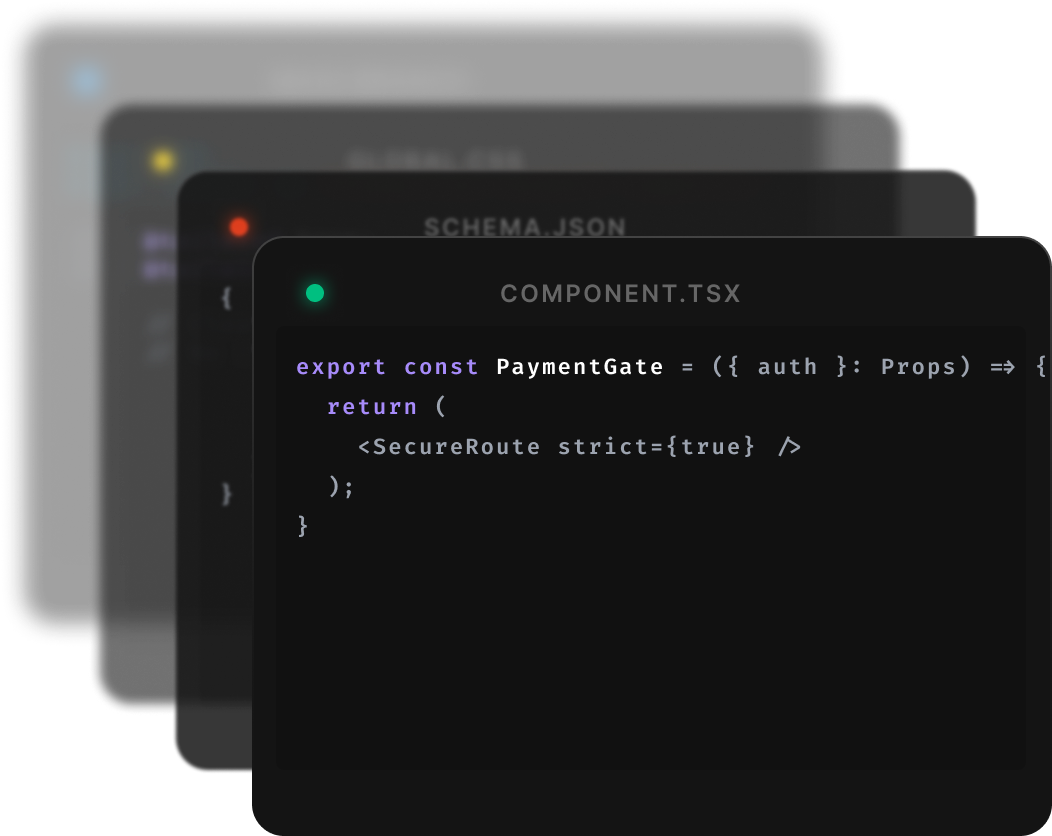
Unlock’s frontend workstream combines visual systems, interactive product storytelling, motion, accessibility, schema, Core Web Vitals, failure-mode positioning, and architecture documentation into one production surface.
The Unlock Compliance Architecture Framework (UCAF v1.0) is the framework that defines how our three workstreams are mapped, connected, and evidenced. These include frontend design, compliance mapping, and RevOps. It is the proprietary blueprint used to translate static regulatory obligations into active and interactive digital infrastructure.
Most scaling fintechs rely on a fragmented triad of vendors.
This results in a frontend that looks compliant but fails under due diligence scrutiny. UCAF prevents this structural failure.
It ensures that the visible surface and the invisible architecture tell the exact same story to an investor, a regulator, and a customer.
We execute a complete traceability mapping from the frontend directly to the regulatory obligation. Every public claim, user flow, and disclosure is connected to the requirement it must satisfy.
This covers frameworks like FCA Consumer Duty, CASS 15 safeguarding, and DORA Article 30. Under this system, material claims are mapped to a documented architectural basis instead of being asserted without one.
Legibility is the product. UCAF makes your organisational maturity visible at the point of first impression. We package this mapping into a diligence ready artefact so that a regulator, an acquirer, or a lead investor can read the relationship between your visible surface and underlying obligations without a translator.